
Full review in English · GL SERIES ITALIA
In Pls Love, the Thai GL series starring LenaMiu, hatred carries weight, and desire alone cannot erase it. We see it immediately in Pheem, dominant and arrogant, stubborn to the point of becoming destructive, and in Parn, who understands and excuses even the behaviour that hurts her. This dark romance grows out of that imbalance, and BEC World and Channel 3 (@Ch3Thailand_33 @Ch3Plus) deserve credit for bringing this toxic relationship to the screen without softening its edges. The abuse, both verbal and physical, remains abuse even when it is inflicted by a woman we have grown attached to. We can understand Pheem without letting her off the hook: for us, that is where the series gets the balance right. The hatred between them leaves real wounds, and their love gains strength precisely because it has to find a way through that hurt.
Above all, Lena Lalina Schuett (@lena__lorena) and Miu Natsha Taechamongkalapiwat (@miunatshaa) make us believe in this relationship. We had already admired them in the Girls’ Love series My Safe Zone, the only worthwhile title in BEC World’s entire 2025 slate, as far as we are concerned. The rest relied on the audience’s goodwill to make up for what the writing lacked. In Pls Love, the step up is unmistakable: their preparation shows in their gestures and reactions, yet the performances never feel laboured. Lena gives Pheem a hard edge that remains even when her vulnerability breaks through; Miu makes us feel the emotional toll of Parn’s constant willingness to understand the woman hurting her. Their chemistry is just as convincing in their confrontations as it is in their kisses, drawing us close to two women who can also drive us up the wall. Their performances work because the characters feel alive, even when we want to shake some sense into them.
The direction (@Patty_kinky) is at its best when guiding these performances. Its presence is felt more in the characters’ behaviour than in the framing: a movement of the hand, the way someone leans in for a kiss, a change in posture as she starts to cry. When Pheem curls up in a corner of the sofa, a woman used to asserting herself suddenly takes up almost no space. She folds in on herself, as though seeking shelter. The gesture captures the collapse of her authority and lays bare her vulnerability. It is a carefully judged scene in which the body tells us what dialogue might have overexplained.
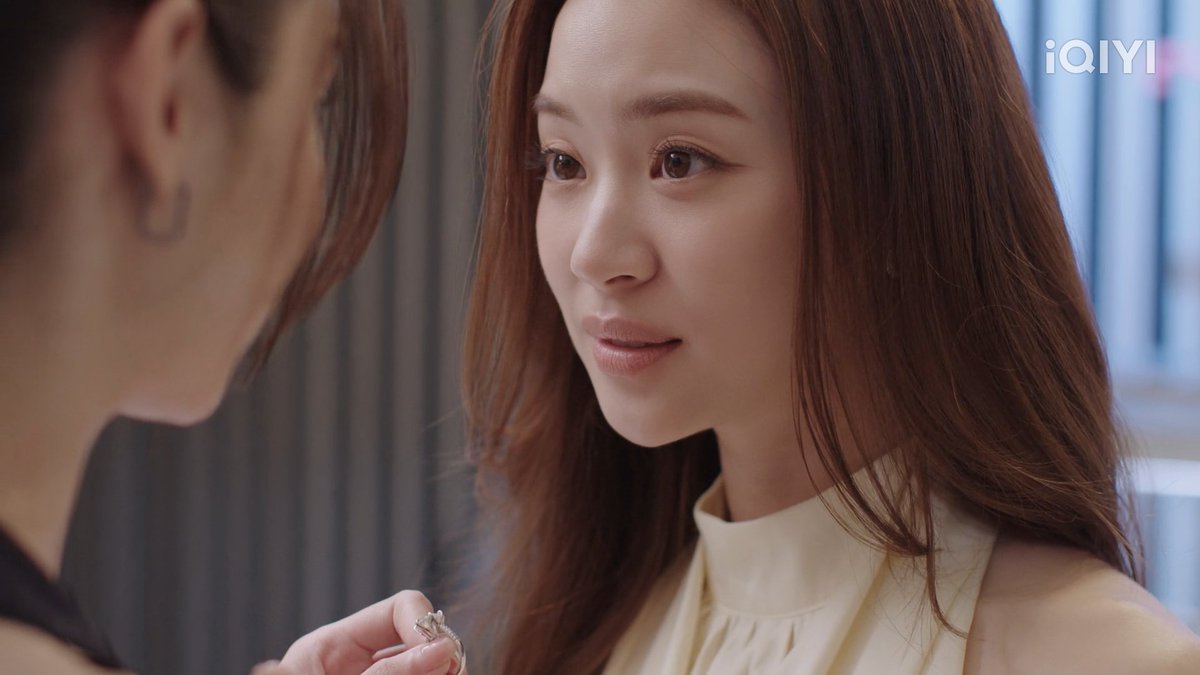
That is precisely why the technical shortcomings stand out all the more. The editing is careless and the sound uneven: the production struggles to match the quality of its performances. Lena and Miu often make us overlook these missteps, but the technical departments should not be coasting on the cast’s talent. Whether a tight budget or problems on set played a part remains an open question. On screen, the attention to detail is inconsistent: a production capable of getting a gesture exactly right can still falter in the editing or sound. Pls Love is compelling enough to make us forgive a great deal, but it is hard not to think about how much better it could have been with stronger technical execution.
The Pls Love finale wins us over again through the physical reality of what its characters endure. The fight is dirty and desperate: two women fight tooth and nail to survive, and the danger feels real because we can sense their limits. For once, neither suddenly discovers she can take down the Hulk after a single afternoon of training. They remain vulnerable, and each reaction could be the one that keeps them alive. The same eye for realism extends to the hospital scenes, right down to the blood when an IV cannula is yanked out. The action leaves a mark, and the body pays the price. It is a small detail, but it makes the scene believable and shows how much melodrama can gain from respecting its characters’ physical reality.
It is this attention to detail that makes Pls Love, for us, one of the strongest GL series, despite its obvious technical limitations. The plot uses familiar devices, but Pheem and Parn have enough depth to make us forget how familiar those devices are. And this is where the comparison with so many other series becomes damning: chemistry between two actresses cannot keep doing a screenplay’s job, and dragging out the same misunderstandings for episodes on end does not amount to dramatic conflict. Familiar situations become tedious when the characters inhabiting them are hollow. Pls Love keeps us invested even when we can see where it is heading, because we care how its protagonists will get there and what it will cost them. The fact that a show with flaws this obvious can still stand out says a great deal about Pls Love, and something far less flattering about those who have made a business model out of lazy writing.
